Cathedral Clubbing
Quick take on the return of the Anglican repressed
The classic line for people who enjoy burning the candle at both ends is “My body’s not a temple, it’s a nightclub.” To which the Anglican response seems to be: our temple is also a nightclub.
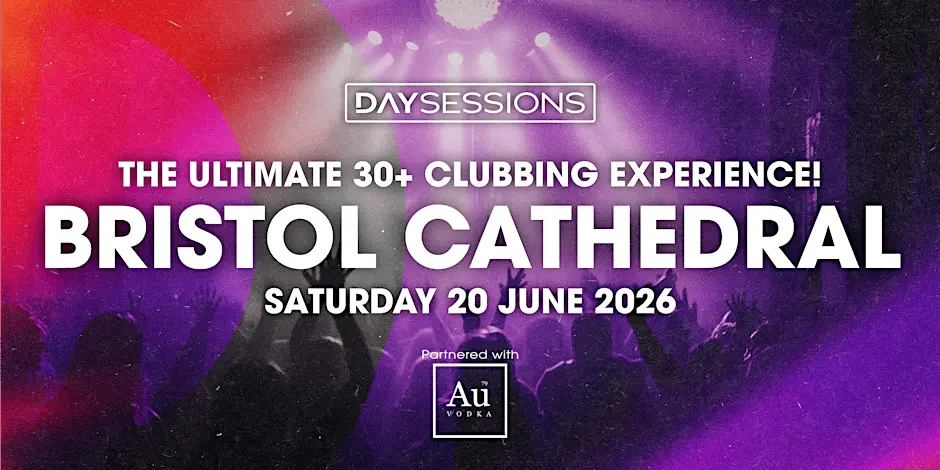
Well, a dayclub. Fresh from last year’s “silent disco” in Salisbury Cathedral (there’s another one of those this summer too), Bristol Cathedral is offering a “Ultimate 30+ Clubbing Experience” in June, in conjunction with a vodka brand. Partygoers will be able to enjoy classic records from the 80s, 90s, and 00s in a “stunning cathedral venue” while dancing and, presumably, swigging vodka.
For those who still hold to the quaint notion that churches are sacred spaces and should be treated with reverence, this may seem jarring. But I wonder if we could interpret it less as outright blasphemous than an effort, however wrongheaded, at bringing the “vibe” back. For it’s not a coincidence that the Bristol disco is offering music from the 80s, 90s, and 00s. The target audience is clearly people my age: Gen X, or as I prefer to think of us, late boomers, a group that continued the boomer tradition of smashing idols but without any of the boomer optimism about what would result.
What did, in fact, result was a nihilistic culture of negation and hedonism: “lad culture”, New Atheism, and raving. As an ex-raver I speak from experience when I tell you rave always had a deliberate energy of techno-transcendence. Everyone dances alone, but unified and jolted out of self-consciousness by the overwhelming music (and perhaps chemical assistance). The effect is a kind of communion. Club culture veterans will often speak of the sense of love, peace, and spirituality they experienced in that environment.
From a churchgoing perspective this might seem very wrong-headed. But a more charitable read is that it speaks to how the deepest human needs have a way of re-emerging, even within cultures that have poured all their energy into repudiating them. Even the generation that invented New Atheism also, sort of, re-invented charismatic praise and worship, just without the Jesus bit.
So perhaps it shouldn’t be a surprise that notwithstanding all the chatter about Catholic and Orthodox revival, the strongest signs of Christian growth aren’t in the liturgical denominations at all, but in charismatic ones. One of the fastest-growing churches in the UK, according to recent reports, is Elim Pentecostal Church. I have no clue whether, theologically speaking, this group believes in the real presence of Christ in the Eucharist (maybe someone can help in the comments?) but it’s clear enough from their website and video output that their services have plenty of cathedral-disco energy. From Halloween “light parties” for kids, to worship music complete with smoke machines and high-tech lighting, Elim’s swelling congregations attest that for people who want to vibe, there’s something potent and appealing here.
Importantly, Elim have managed to embrace rave energy without letting go of the God bit. Charismatic praise and worship isn’t my thing, but clearly lots of people like it. And it strikes me that Anglican cathedral raves and silent discos represent a kind of spasmodic acknowledgement of this: a sort of return of the repressed. Are the people who OK’d these events trying to lure my nihilistic, hedonistic, often spiritually very lost generation back onto holy ground? If so, I wonder if instead of giving sacred spaces such as the cathedrals in Salisbury and Bristol over to secular discos, it wouldn’t be better to invite the charismatics in, smoke machines and glitterballs and amplifiers and all?
Against this, some might retort that it’s futile to try and make Christianity cool, and in fact this is a feature, not a bug: we should all be cringemaxxing. Objectors might further demur that rave Anglicanism was tried back in the 80s and 90s, with the Nine O’Clock Service, only for it to turn into a cult with sex abuse scandals. But again: plenty of charismatic churches seem to have found a compromise space that’s neither rave nor cult, and which is bringing people back into church communities. Against this, museum Anglicanism plus secular raves feels like a cop-out. The repressed always returns, somewhere, somehow - whether it’s invited into our cathedral spaces or not.
Glitterballs and Jesus: what do you think? Is rave Anglicanism guaranteed to go wrong? Should we keep a lid on anything too Dionysian? Throw your brickbats at me in the comments:


To answer your question: Elim is a Pentecostal church and thus is descended theologically from US Methodism which itself descended from Wesleyan and with a side helping of prosperity gospel. So the table is symbolic. They are not Anglo Catholic.
Interesting reflection today Mary. Bewildering times, as ever.
Today in the Catholic world it is the feast day of Saint Catherine of Siena, who famously said: ‘become who you are meant to be and you will set the world on fire’.
Not sure what St Catherine would have to say about ‘Come on baby light my fire’ being howled in the hallowed vaults of Bristol Cathedral, but being a Third Order Dominican, it might be something on the lines of: ‘Who is the baby you sing to? What will you do with such fire? Who is this rowdy ritual glorifying?