

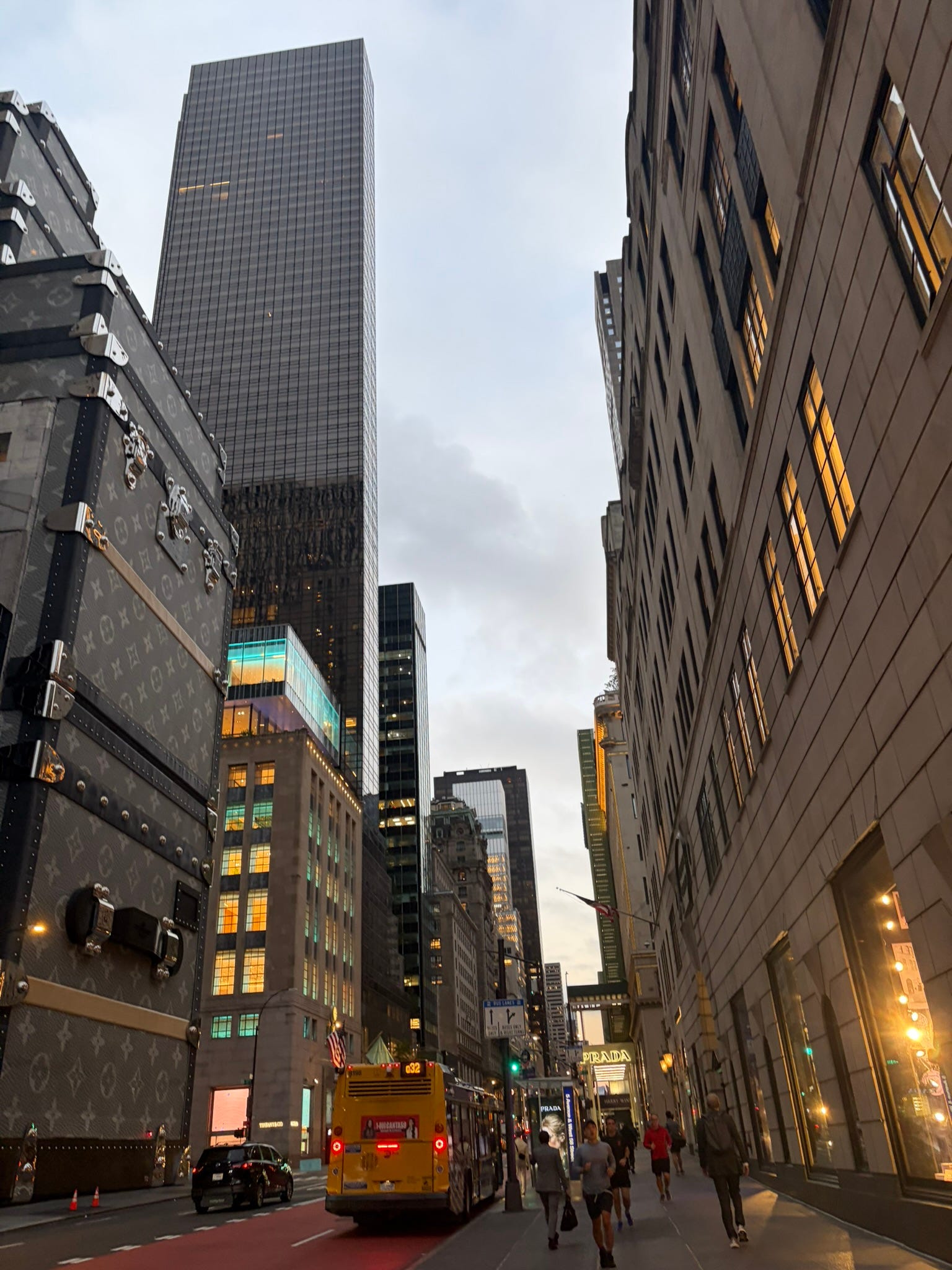
Baudrillard said it’s not possible for anywhere in Europe to be truly modern. Only America, he said, can do that. Having spent the last three nights in New York City, I’m minded to agree with him.
New York is so photographed, filmed, and mythologised that there’s surely nothing left to say. But honestly: it should be recognised as a wonder of the modern world, just as the Lighthouse at Alexandria was a wonder of the ancient one.
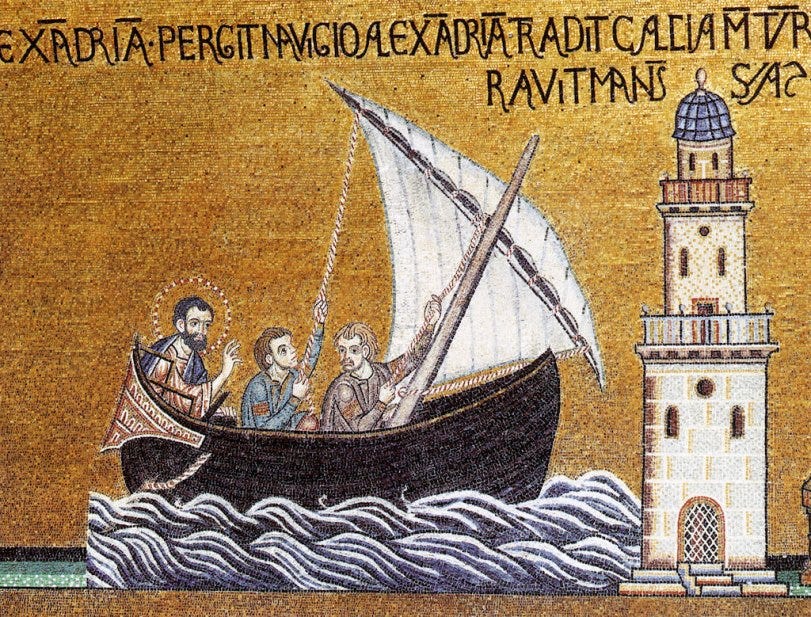
The other day, on a rooftop at UnHerd’s just-opened event space in Midtown, chatting to someone I absently registered the vertical canyons of plate glass behind me like: “oh this must be painted on some huge canvas, nothing like that could possibly be real.” But it’s real. The same sense at 0530 this morning, running through Central Park. Now and then I’d glance up and there, in the gaps between trees, is this totally sci-fi backdrop, again just impossible and yet definitely there.
It was a busy trip! I was in town to interview several wonderful guests for Socrates Dialogues. I spoke to Diana Pasulka, a professor of religious studies who specialises in UFOlogy, the theologian Carl Trueman, and the economist and author Catherine Pakaluk. They were all so great! I also guest-hosted an episode of Interesting Times at the NYT, where I spoke to James Marriott about The New Dark Ages, his bestselling new book on the coming age of post-literacy.
The looming theme of several conversations was the intersection of print, image, and religiosity. (James and I laughed at the irony of taking to video podcast, to discuss the cultural impact of abandoning reading for the moving image.) Diana’s work focuses on the way digital media transforms our consciousness, and the new forms of religious experience this is mediating. Both those conversations will be released next week: the Marriott one at NYT Opinion, and the Pasulka episode at Socrates.
Continuing the theme of image, enchantment, print, and post-print, in a brief hour of downtime I had the opportunity to visit the Morgan Library, founded by Gilded Age banker JP Morgan. Now it’s a whole cultural centre with several galleries, but I wanted to see the historic collection. In particular, having spent most of the last year writing about the beginning and end of the print revolution, I felt compelled to see the Gutenberg Bible on display there: the text that really started it all.
That artefact gave me chills. But the whole library gave me chills! I ended up just sitting there, for ages, taking in the beautiful lines and atmosphere.
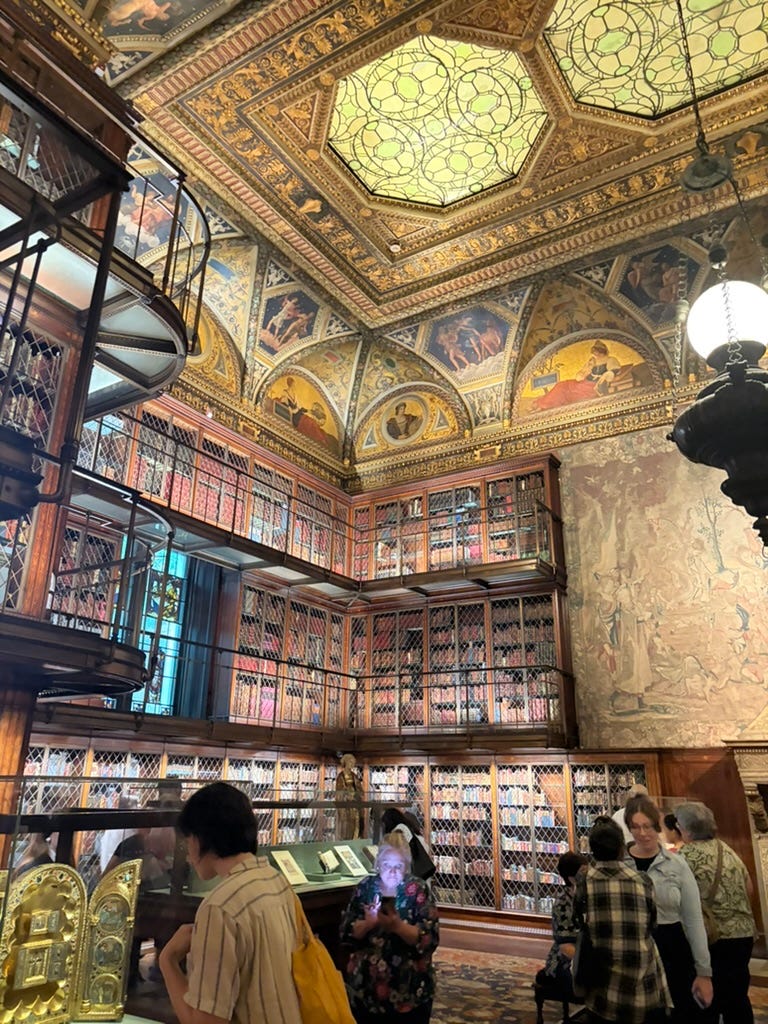
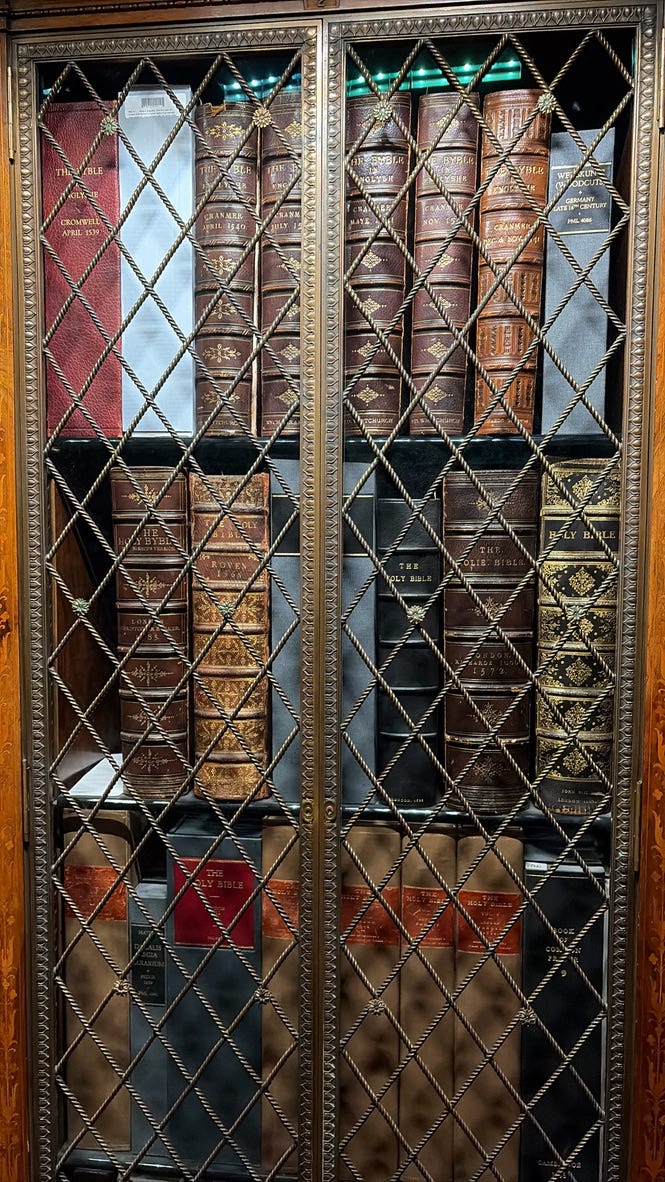
The room itself is an artefact, where every inch that’s not shelved is covered in beautiful detailing, and exquisite frescoes depicting literary genres. The collection is astonishing too. Just this one short section of shelves holds crucial artefacts from England’s early modern wars of religion:
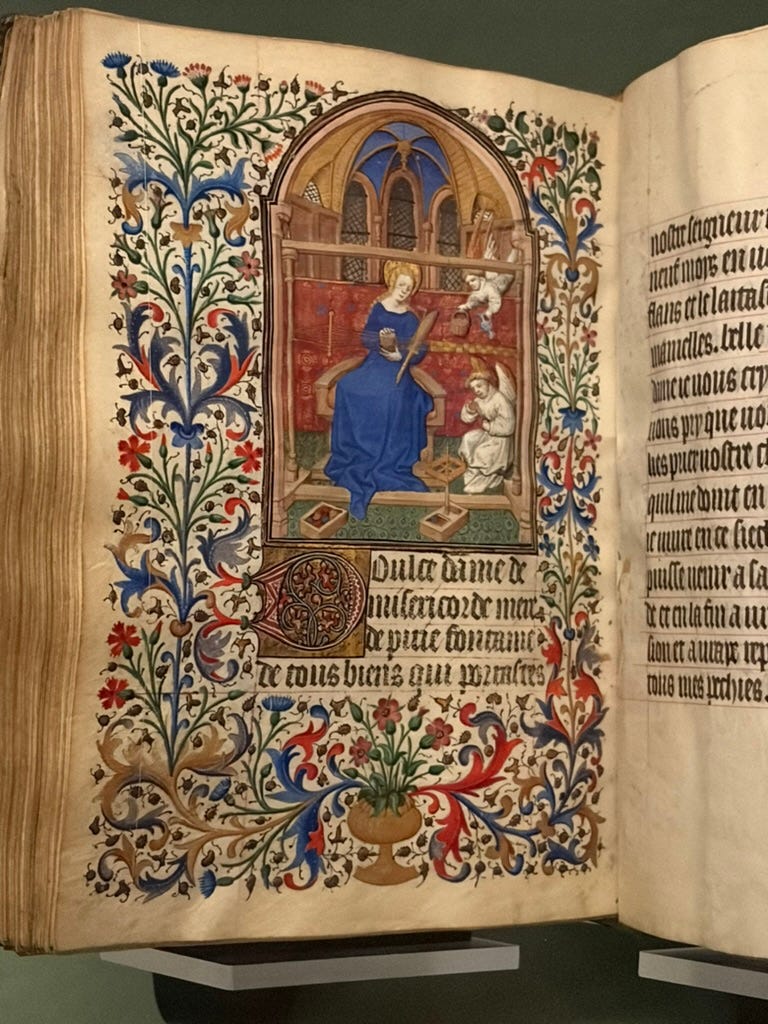
Display cases show works from Morgan’s collection of pre-print, illuminated manuscripts…
…and others held jewelled medieval book covers, that look like they’re lit from within by sacred fire:
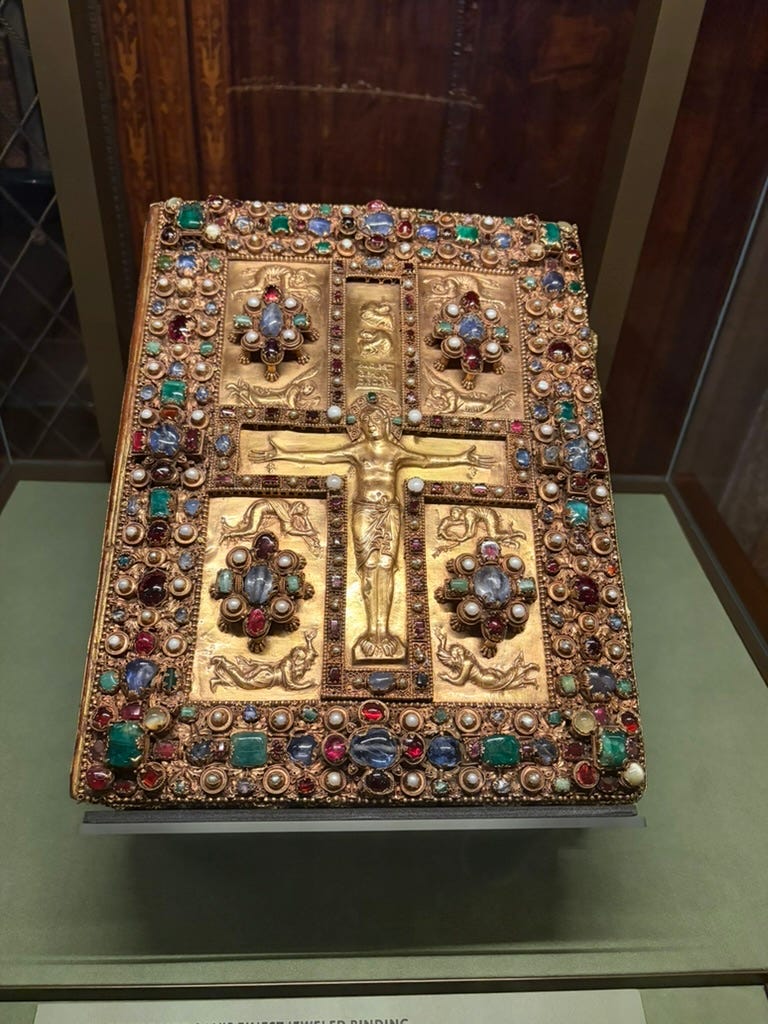
Do we still treasure books like this? Well, kind of, but in a muted and ambivalent way. One of the features of the AI revolution that’s prompted the most angry public reaction is the discovery that AI companies are buying up printed books for “destructive scanning”, which is to say cutting the spines off, scanning the pages for training data, then shredding the remnants. The outraged response surely has its deep roots in the reverence that, all the way back in premodern times, prompted bookmakers, scholars, religious, and artisans to lavish effort, skill, and treasure onto devotional book-treasures such as this one.
The mechanically printed books now being shredded by AI are a dim shadow of such artefacts. You might even argue that it was print - the technology of Gutenberg - that first de-mystified and in a sense tore apart those older, hand-written sacred objects ,just as AI is now de-mystifying and tearing apart the printed kind.
My question as ever is: what comes next? The sense I’ve hatched all through The King and the Swarm (which, by the way, has now GONE TO THE PUBLISHER!!!!) is that the result will be bringing us out the other end of a long stretch of disenchantment, into someplace very much weirder.
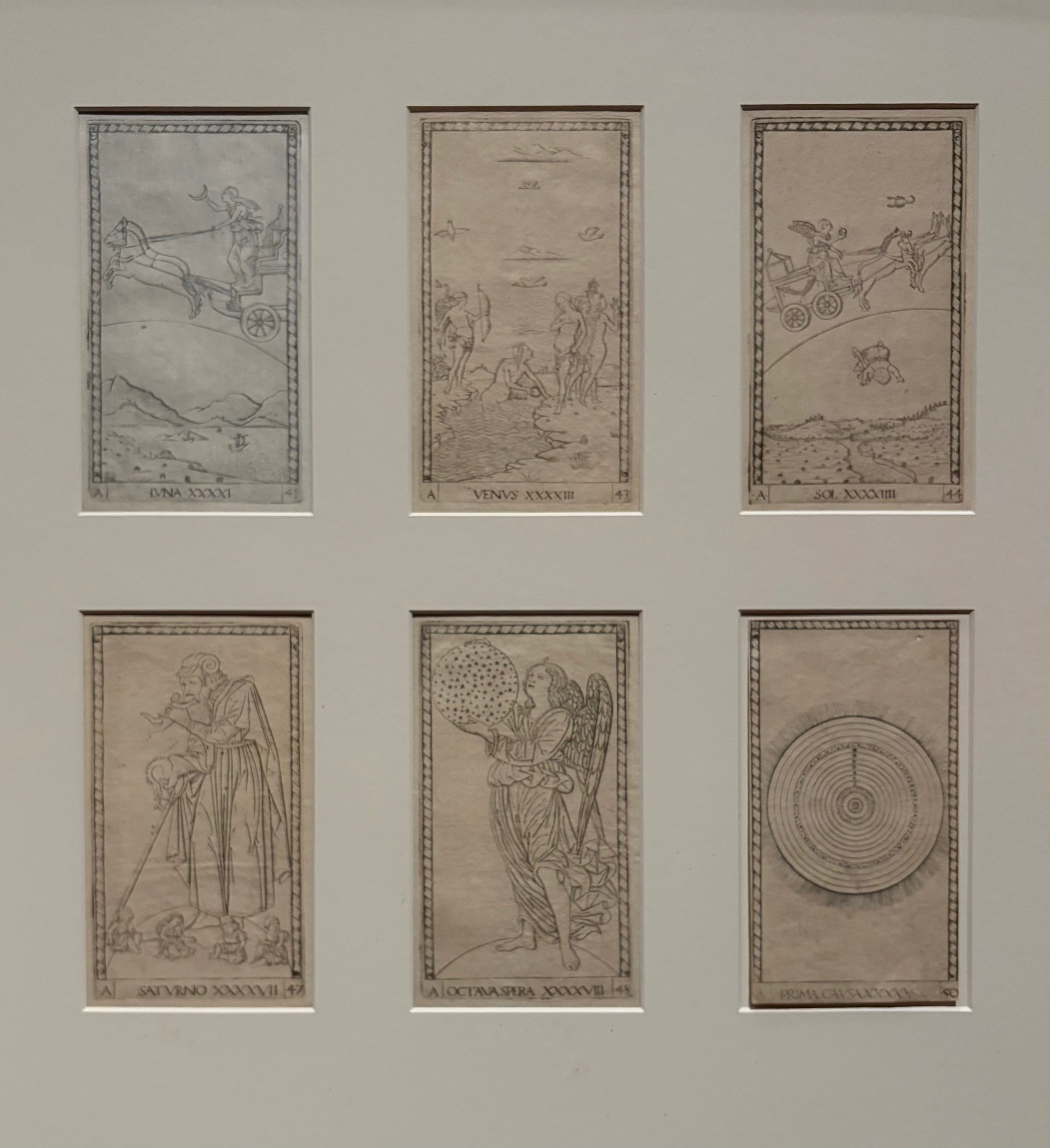
On that note! Also at the Morgan Library was an exhibition of Tarot cards. In one gallery was a display of Renaissance cards, some hand-painted and gilded and some exquisitely drawn:
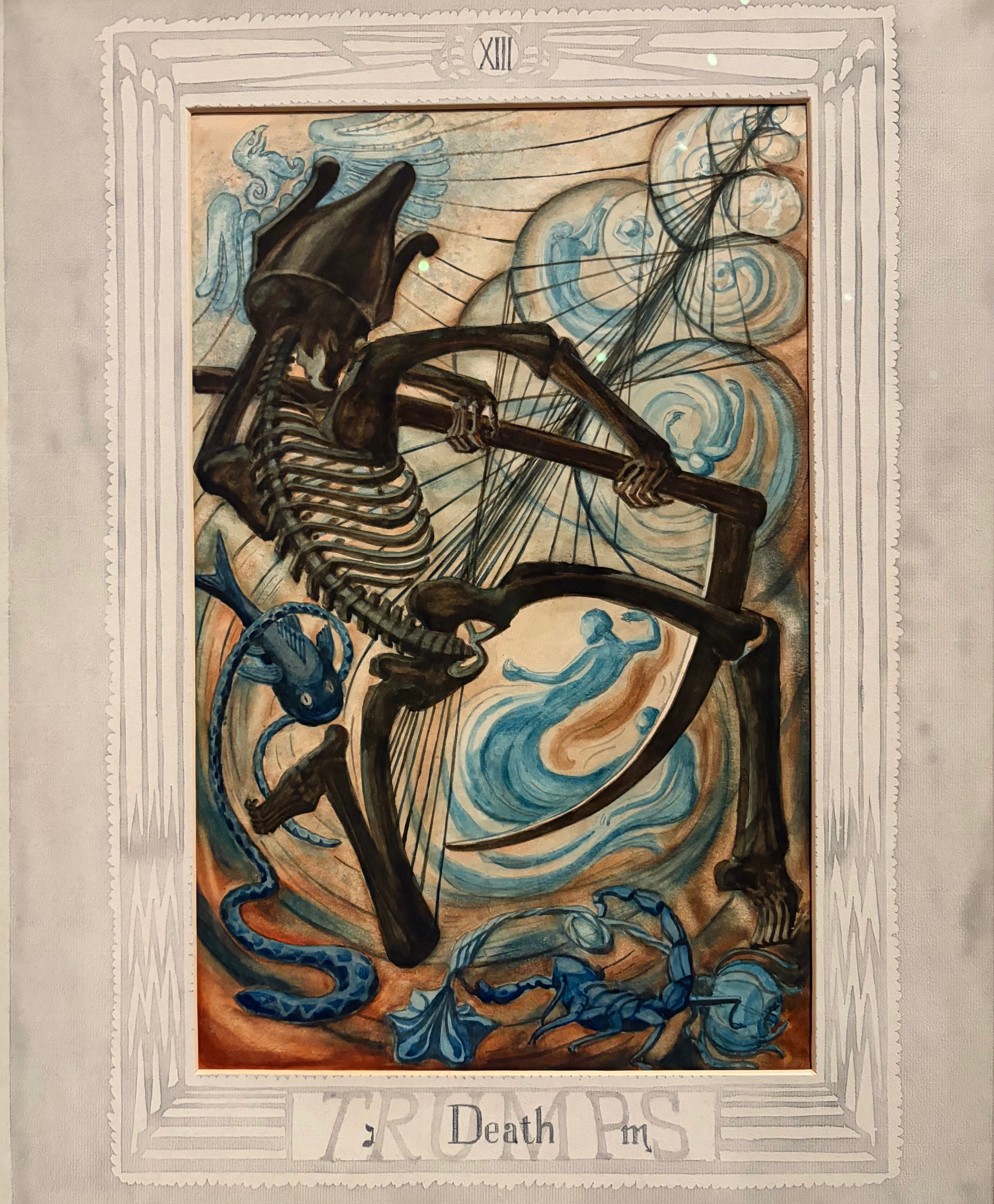
In an adjacent gallery was a display of more recent interpretations of the Tarot, including originals for the famous deck created by British occultists Aleister Crowley and Lady Frieda Harris between 1938 and 1943 drawing on a host of mystical traditions plus the projective geometry of Rudolf Steiner:
I didn’t have very long and was very tired, so lingered in the library only about an hour, most of which I spent with Gutenberg. But I was struck by just how much more crowded the Tarot exhibition was, than the historic library. Are we just more at home with emblems, images, and enchantment now, than with the written word? As the machine continues busily shredding our printed legacy, and digesting it for whatever comes next, perhaps the relative popularity of the exhibits is a sign of things to come.
What a whirlwind! This message comes to you from the Acela corridor, where I’m en route to a few more engagements in Washington, before zooming home again on Monday. After that I think I’m going to need a couple of days in a darkened room, breathing into a paper bag. More reflections to follow when I’ve had a chance to catch my breath…
The Morgan Library is a wonder. It’s about the right size for my own imagined Night at the Museum—staircases, hidden doors, balconies of books. Divine.
Oh Mary, what a wonderful experience you had! We will be arriving just as you leave - our first time visiting from the UK. We will definitely head for the Gutenberg Bible (and stand in awe) but am not so sure about the early morning jogs through the park!